
Overview
- Type: Pocket Knives
- Brand: Boker Germany
- Overall Length: 7.87 in
- Blade Length: 3.35 in
- Blade Thickness: 0.16 in
- Weight: 4.90 oz
- Blade Material: Damascus
- Handle Material: Micarta
- Opener: Thumb Stud
- Opening: Manual
- Lock Type: Framelock
- Made in: Solingen, Germany
- Color: Brown
- Blade Color: Uncoated
- Item Number: 111103DAM
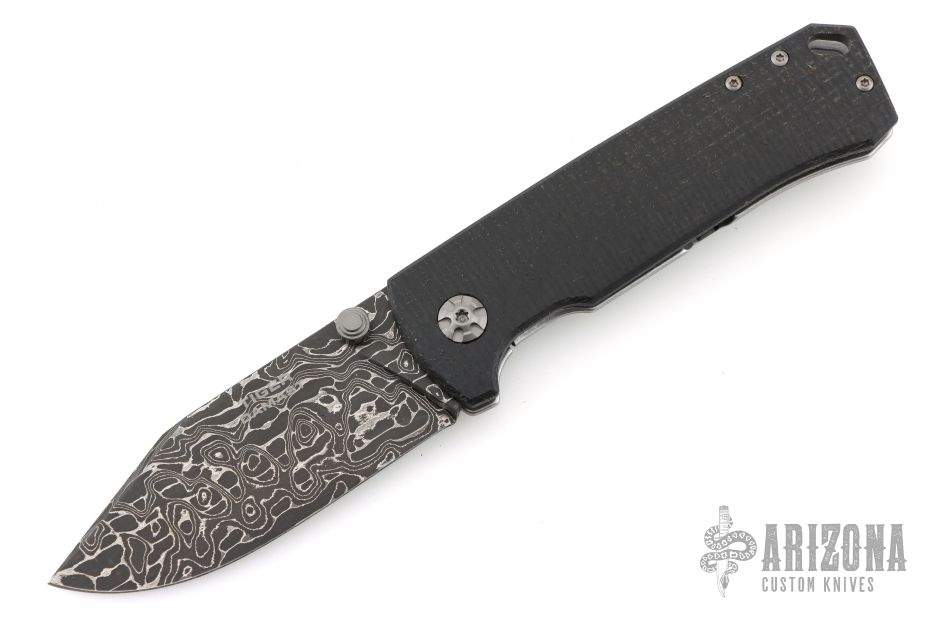
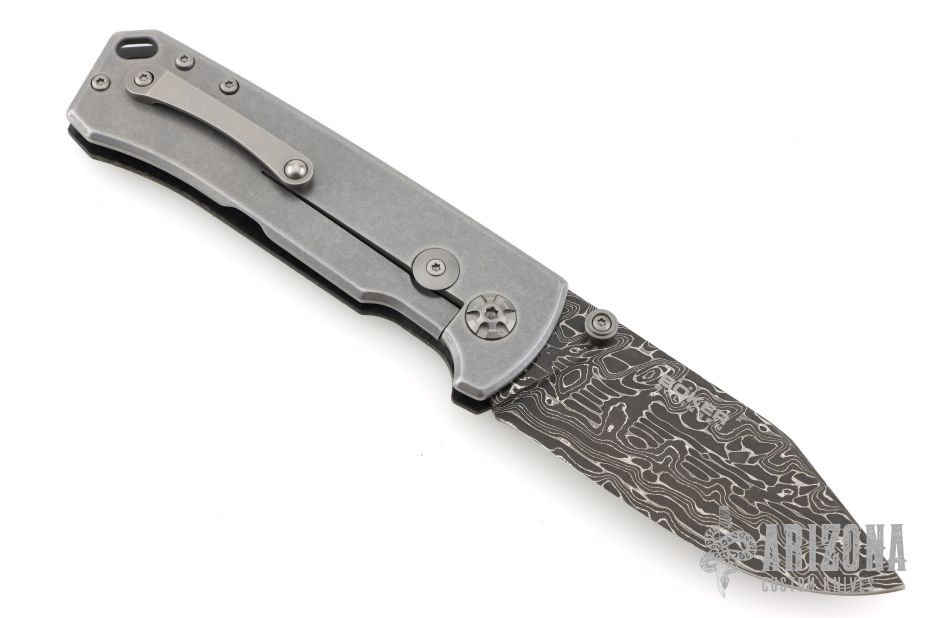
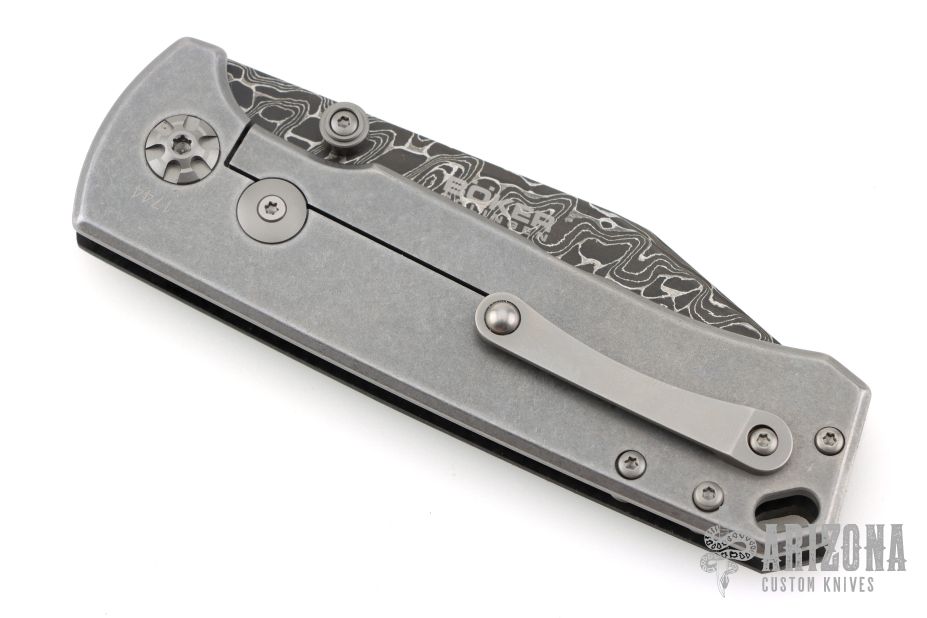
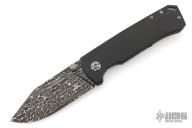
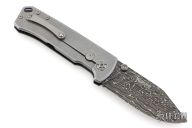
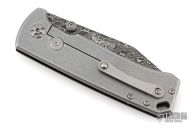
The impressive Boker Tiger-Damast expands Boker’s series of historically inspired pocket knives with a truly exceptional collector’s piece. Rich in provenance, this knife represents living history—uniting high-end craftsmanship with authentic historical materials. Known worldwide as the Tiger, the Panzerkampfwagen VI entered service with the German armed forces in late summer 1942. Despite a comparatively limited production run of approximately 1,350 units, it is regarded as one of the most iconic tanks in history. Development of the heavy tank began as early as 1937, with series production commencing in August 1942. Today, only seven original Tigers remain preserved and displayed worldwide. Due to their rarity, even reconstructed examples—so-called Frankentigers assembled from components of different production years—are of significant historical interest. The steel used for the Boker Tiger-Damast originates from a Tiger I of the Schwere Panzerabteilung 502, destroyed in combat during the summer of 1944 near Bauska, Latvia, in heavily wooded terrain. Analysis of the recovered wreckage indicates that this tank was an early- to mid-production model. Examination of battle damage, military records, and contemporary local accounts suggests the vehicle engaged both a Soviet T-34 medium tank and an SU-76 tank destroyer, while also sustaining hits from a stationary 45 mm anti-tank gun. Multiple 76 mm projectile fragments embedded in the armor point to decisive hits from a nearby T-34, which was itself destroyed approximately 300 meters away. Which impact ultimately disabled the Tiger remains uncertain. At the time, renowned tank commanders Otto Carius and Albert Kerscher, among the most successful of the Second World War, were engaged with the Schwere Panzerabteilung 502 in attempts to halt the Soviet advance toward Riga. The unit’s actions near Tukums enabled a strategic retreat of more than 500,000 soldiers of Army Group North into the Latvian region of Courland, where they remained encircled yet supplied by sea. The so-called Courland Pocket withstood six major Soviet offensives before the unconditional surrender on May 8, 1945. The straight-edged Boker Tiger-Damast features a distinctive non-stainless mosaic Damascus blade, forged from the original armor steel of the Tiger destroyed near Bauska. Hand-forged by Chad Nichols in the expressive Intrepid pattern, the blade evokes the powerful tracks imprinted by the tank’s immense weight. Unlike conventional layered Damascus, mosaic Damascus is created through an especially complex process in which intricately forged Damascus bars are assembled into a unified pattern—an approach that demands exceptional skill and precision. The ball-bearing blade opens smoothly via a thumb stud and is secured by a robust steel frame lock with a stonewashed finish. A Hinderer Lock-Stop provides overtravel protection for enhanced safety. The knife’s overall form echoes the unmistakable contours of the Tiger tank, while the decorative pivot screw is modeled after the vehicle’s main drive sprocket. Slightly contoured burlap Micarta handle scales feature precisely milled grooves inspired by the textured Zimmerit coating applied to German armored vehicles. A lanyard hole and a milled pocket clip (tip-up, right-hand carry) with steel ball complete the functional design. Handcrafted in the Boker Knife Manufactory in Solingen, the Boker Tiger-Damast is presented in an elegant suspended display, accompanied by a certificate of authenticity and an individual serial number, affirming its status as a distinguished collector’s piece.
Comes with original box, papers, pouch, and clear plastic frame case/outer paper sleeve. Excellent condition.