
Overview
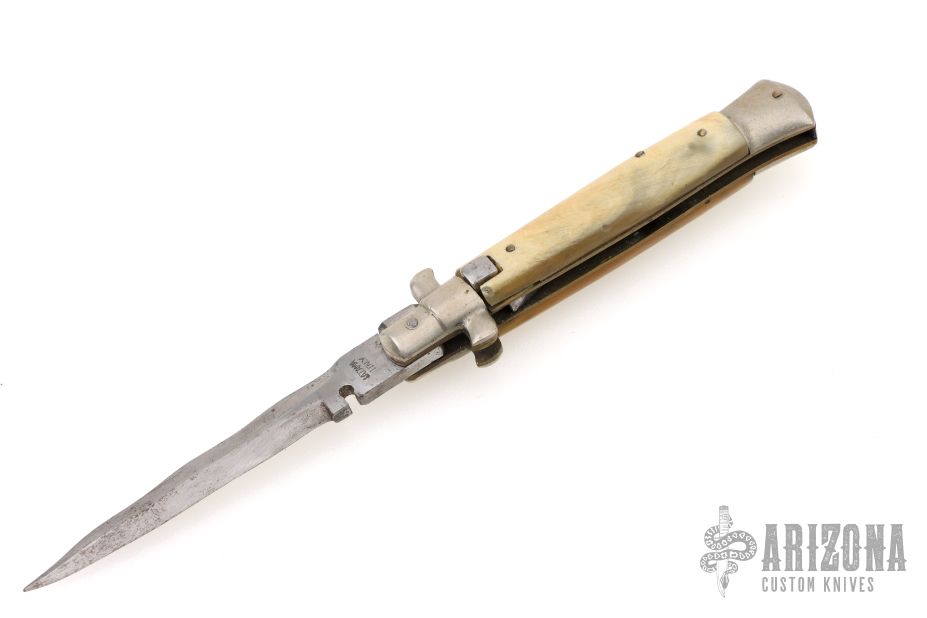
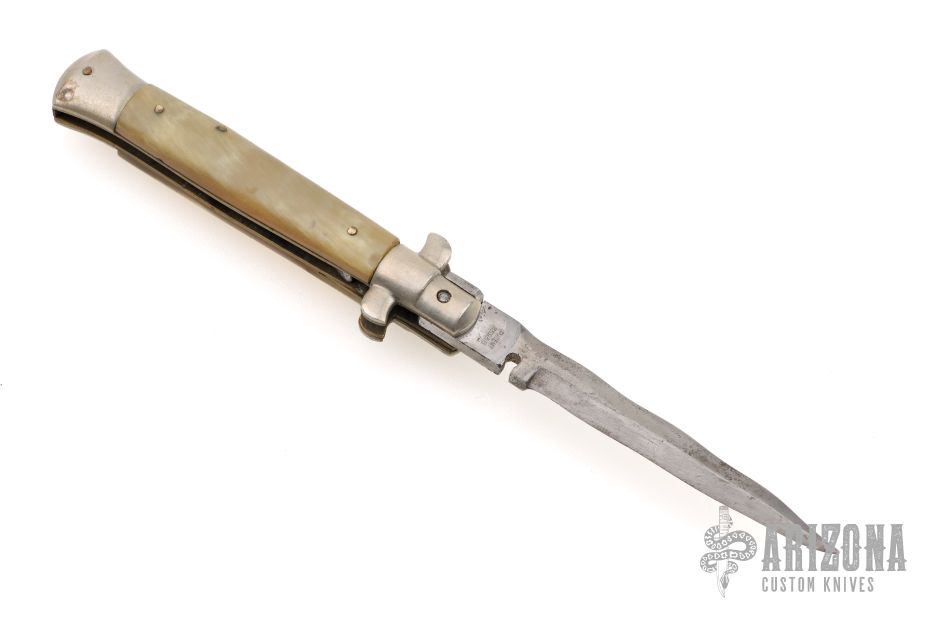
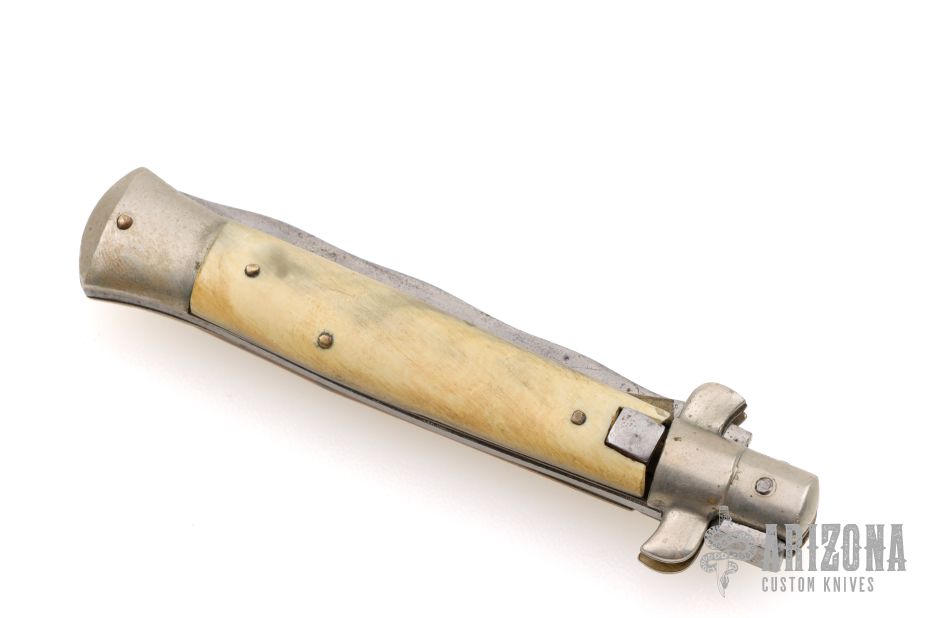
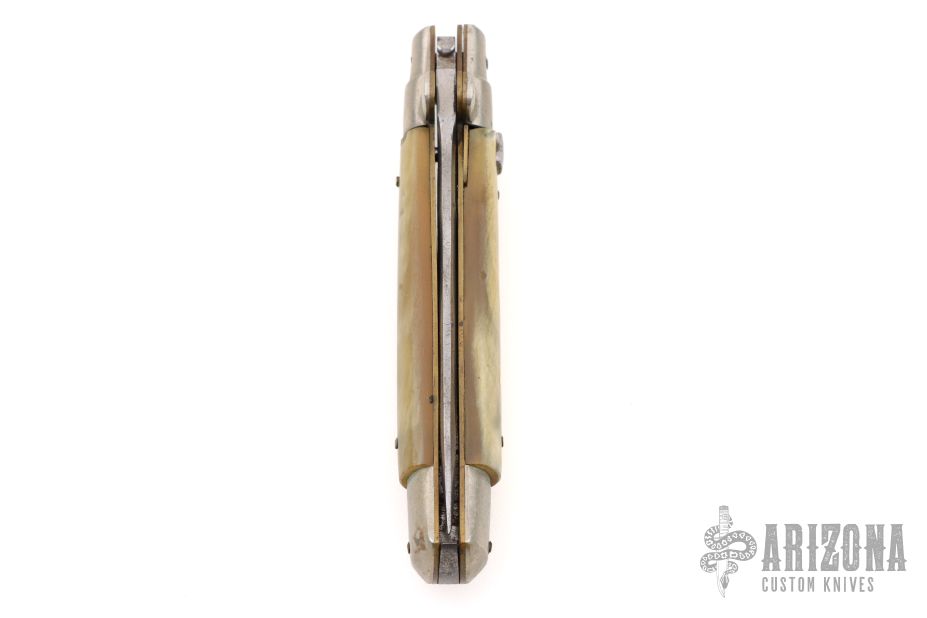
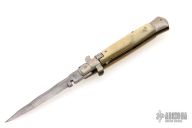
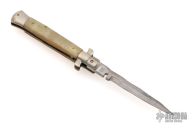
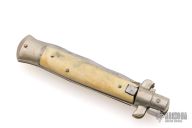
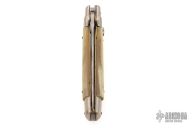
This Rare Square Button Swivel Bolster Auto by Latama is vintage. It features a Kris ground blade with a false top edge. The handle has nickel silver guard and rear bolster, white horn scales, brass liners, steel backspacer with square lock tab. Has nickel silver SQUARE button. The safety is hidden under the front bolster, a small piece of brass pivots under the button to prevent it from being depressed. The safety is released by pivoting the top, front bolster, and then a small extension on the bottom end of the bolster catches the brass safety and pivots it from under the button. Has scratches and a little patina, has some blade play, otherwise good condition for its age. Has "PAT 35958" on the blade.
LATAMA's history has been argued to extend as far back as before World War 2. But, LATAMA's initial switchblade collection spanned less than ten years, and those were prior to the enactment of the 1958 Federal Switchblade Act.
Almost all of LATAMA's production has imported into the U.S. extending back to out origins. Americans have always been the principal consumers of LATAMA switchblades. Prior to the Federal Switchblade Act, LATAMA dominated retailers across America, providing all major outlets with cutlery.
One of the rare LATAMA designs is the 'square' button models produced in very limited quantities. They were created as samples or prototypes but did not appeal to the retailers who wanted to stay with the traditional button and sliding safety models. The button is positioned where the front bolster meets the scale, almost touching the bolster. Most square button models have a very novel safety feature; a small piece of brass pivots under the button to prevent it from being depressed. The safety is released by pivoting the top, front bolster, and then a small extension on the bottom end of the bolster catches the brass safety and pivots it from under the button.
Another unique characteristic of the square-button is the way it locks up the blade in the closed position. Unlike the lock-up with the traditional button, these required a cut-out in the blade. The button tops a post with a distinct lathed or shape to it. The post bisects the inside of the knife, extending through both liners. When the blade is closing, the shape of the button post connects with the cut-out, and the button is pulled down and pops back up as it is seated in the blade.